

Dropped My Electric Guitar and Cracked the Neck. What Should I Do?
Accidentally dropping a guitar is every guitarist’s nightmare. One moment it’s safely on a stand, the next it’s lying on the floor with a frightening crack running through the neck.
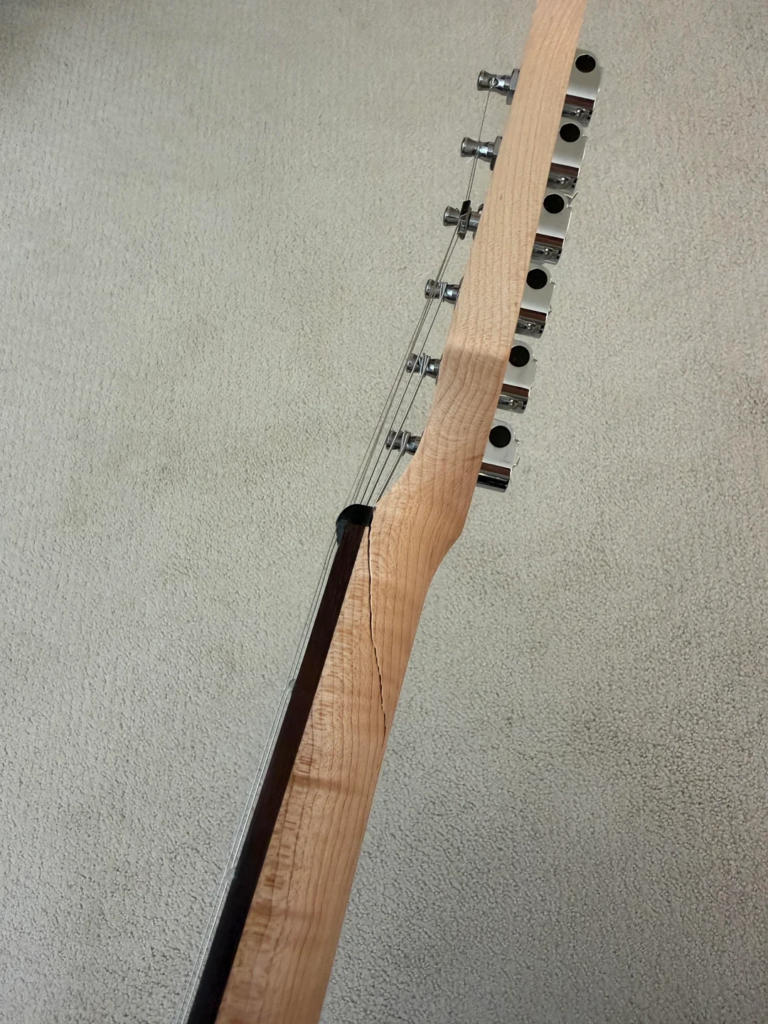
That’s exactly what happened to a Yamaha Pacifica PAC112V that originally cost around $285 before tax. The impact caused a structural crack on the back of the neck, leaving the owner wondering whether to:
- Pay for a structural repair
- Continue playing until it completely fails
- Replace the guitar entirely
If you’re facing the same situation, this guide explains each option in detail, including repair costs, long-term reliability, and which choice provides the best value.
Understanding a Neck Crack
A crack on the back of the neck isn’t always cosmetic.
The neck constantly withstands string tension, often exceeding 100 pounds (45 kg). Even a small crack can become larger over time, especially if it reaches deep into the wood fibers.
Typical symptoms include:
- Visible crack behind the neck
- Crack near the headstock
- Finish separating from wood
- Guitar still tunes normally
- No immediate buzzing
- Stable action
Even if the guitar appears playable today, structural damage can worsen unexpectedly.
Common Causes of Guitar Neck Cracks
The most common reasons include:
- Guitar falling from a stand
- Tipping over against furniture
- Transport accidents
- Weak impact point near the headstock
- Sudden temperature or humidity changes
- Existing hidden wood weakness
Entry-level guitars are not necessarily weaker, but any wooden neck can crack when enough force is applied.
Option 1: Professional Structural Repair
What Happens During the Repair?
A qualified guitar technician usually:
- Opens the crack carefully (if necessary)
- Injects high-strength wood glue
- Clamps the neck correctly
- Allows proper curing
- Sands and blends the repair
- Performs a complete setup
If the repair is done correctly, many neck repairs become stronger than the surrounding wood.

Average Repair Cost
Typical prices vary by region.
| Repair Type | Estimated Cost |
|---|---|
| Glue & Clamp Only | $60 to $120 |
| Structural Repair + Setup | $100 to $180 |
| Crack with Finish Touch-Up | $150 to $300 |
| Major Headstock Repair | $200 to $450 |
Since the Yamaha PAC112V sells for around $300-$350 new, spending over $200 may not make financial sense unless the guitar has sentimental value.
Advantages
- Restores structural strength
- Keeps original instrument
- Maintains tuning stability
- Prevents complete neck failure
- Usually lasts many years
Disadvantages
- Repair cost
- Possible cosmetic scar
- May slightly reduce resale value

Option 2: Keep Playing Until It Breaks
Many players consider simply ignoring the crack.
Although this costs nothing today, it carries several risks.
Risks
Sudden Failure
Wood cracks can spread quickly.
A neck that survives months may also fail during:
- Tuning
- String bends
- Transportation
- Temperature changes
Poor Tuning Stability
As the crack grows, the neck may begin shifting under tension, causing:
- Constant tuning problems
- Intonation issues
- Higher action
- Buzzing

More Expensive Future Repair
A repair today may cost $100.
Waiting until the neck snaps could increase repair costs dramatically or make repair impossible.
When Is Playing Acceptable?
Only if:
- Crack is clearly only in the finish
- No wood separation exists
- Guitar stays perfectly stable
- Technician confirms structural integrity
Without inspection, it’s impossible to know from appearance alone.
Option 3: Replace the Guitar
For budget instruments, replacement sometimes becomes the smartest financial decision.
Current alternatives include:
- Used Yamaha Pacifica
- Squier Affinity Stratocaster
- Ibanez AZES
- Harley Benton models
- Cort G Series
- Yamaha Revstar Element
A good used guitar often costs less than an extensive structural repair.
Advantages
- Brand-new warranty
- No hidden structural damage
- Better resale value
- Opportunity to upgrade
Disadvantages
- Higher immediate expense
- Lose familiar instrument
- May require setup
Which Option Makes the Most Sense?
If Repair Costs Less Than $120
Repair is usually the best choice.
The Yamaha PAC112V is a reliable beginner and intermediate guitar worth saving when repair costs remain reasonable.
If Repair Costs $200+
Replacement often becomes the better investment unless the guitar has sentimental value.
If You’re Unsure
Take it to a qualified repair technician first.
Many shops inspect guitars for little or no charge and can tell whether:
- It’s only a finish crack
- The wood has split
- Immediate repair is necessary
Can Wood Glue Really Hold?
Yes.
Professional luthiers commonly use:
- Titebond Original
- High-quality aliphatic resin wood glue
When applied correctly to clean wood surfaces with proper clamping pressure, the repaired joint is often stronger than the surrounding wood.
Household super glue is not recommended for structural neck repairs.
Warning Signs That Require Immediate Repair
Stop playing immediately if you notice:
- Crack widening
- Neck flexing while tuning
- Loud creaking sounds
- Strings suddenly going out of tune
- Action changing overnight
- Visible wood separation
These indicate structural failure may already be progressing.
Preventing Future Neck Damage
Simple habits greatly reduce accidents.
- Use a quality guitar stand.
- Lock the strap securely.
- Store guitars in a hard case when possible.
- Avoid leaning against furniture.
- Keep away from pets and children.
- Maintain stable humidity around 45 to 55%.
- Never leave a guitar where it can easily tip over.
Frequently Asked Questions
Is a cracked guitar neck repairable?
Yes. Most structural neck cracks can be repaired successfully by an experienced luthier, especially if addressed early.
How much does a guitar neck repair cost?
Simple structural repairs generally range from $60 to $180, while major repairs with finish work can exceed $300.
Can I still play with a cracked neck?
You can if the damage is only cosmetic, but structural cracks may worsen unexpectedly. A professional inspection is strongly recommended.
Is repairing cheaper than buying a new guitar?
For repair costs under roughly one-third to one-half of the guitar’s replacement value, repair is often worthwhile. If repair approaches the cost of a replacement, buying another guitar may be the better choice.
Will a repaired neck affect tone?
A properly repaired neck usually has little to no noticeable effect on tone or playability.
Final Verdict
For a Yamaha Pacifica PAC112V worth around $285, the most practical approach is:
- Get the crack inspected by a reputable guitar repair shop.
- If the repair is under about $120 to $150, repair it.
- If the estimate approaches $200 or more, replacing the guitar is generally the better financial decision.
- Avoid continuing to play a confirmed structural crack, as ongoing string tension can turn a repairable issue into a complete neck break.
A professionally repaired neck can provide many more years of reliable service, while waiting for it to fail often increases both the cost and inconvenience.
- Best Guitar Strings for Beginners in 2026
- Essential Beginner Guitar Chords Chart: Start Playing Today
- Your First Beginner Guitar Lessons: A Simple Guide
- How Often Should You Change Your Guitar Strings: A Guide
- Guitar Amp Settings Explained for New Players
