

If you’ve picked up a partscaster that plays beautifully but has a poorly applied Fender waterslide decal under the clear coat, you’re not alone. It’s a common issue with aftermarket necks like Allparts vintage-spec 7.25″ radius necks. While the decal may look convincing from a distance, a badly applied logo can become an eyesore every time you pick up the guitar.
The good news? Since you mentioned that you can both see and feel the edge of the decal, there’s a chance it wasn’t buried deeply under multiple layers of clear coat. However, removing it requires patience because there’s always some risk of damaging the finish.
Can You Simply Peel It Off?
Probably not.
Even if the decal edge is exposed, a waterslide decal that has been clear-coated is usually bonded to the finish. Pulling it up with a crafting scalpel may:
- Chip the surrounding clear coat
- Tear pieces of finish away
- Leave an uneven patch
- Create a much larger cosmetic problem
Think of it like trying to peel a sticker that’s been laminated.
First: Determine How Deep the Clear Coat Is
Before touching it with a blade, inspect the decal carefully.
Signs it may be removable:
- You can clearly feel the decal edge.
- The finish doesn’t completely level over it.
- It appears to sit on top of only one or two thin coats of poly.
Signs it probably isn’t:
- The logo looks buried under thick glossy clear.
- No noticeable edge.
- Surface feels perfectly smooth.
Method 1: Carefully Lift the Decal Edge (Lowest Effort)
If the edge is already proud of the surface:
Tools
- Sharp hobby knife or scalpel
- Magnifying glass
- Painter’s tape
- Plastic razor blade
Steps
- Protect the surrounding headstock with painter’s tape.
- Very gently slide the scalpel under only the decal edge.
- Do not cut into the wood.
- Try lifting only the decal film.
- If it resists, stop immediately.
If the finish begins lifting with the decal, abandon this method.
Method 2: Wet Sand the Logo Away
This is how many repair shops would approach a lightly clear-coated decal.
Supplies
- 1000 grit
- 1500 grit
- 2000 grit
- MicroMesh or polishing compound
Process:
- Remove the strings.
- Mask surrounding areas.
- Wet sand only the decal.
- Frequently check your progress.
- Stop as soon as the decal disappears.
- Polish the finish back to gloss.
Advantages:
- More controlled.
- Less likely to chip the finish.
- Leaves a smoother result.
Disadvantages:
- Requires polishing afterward.
- Can dull the surrounding finish if you’re careless.

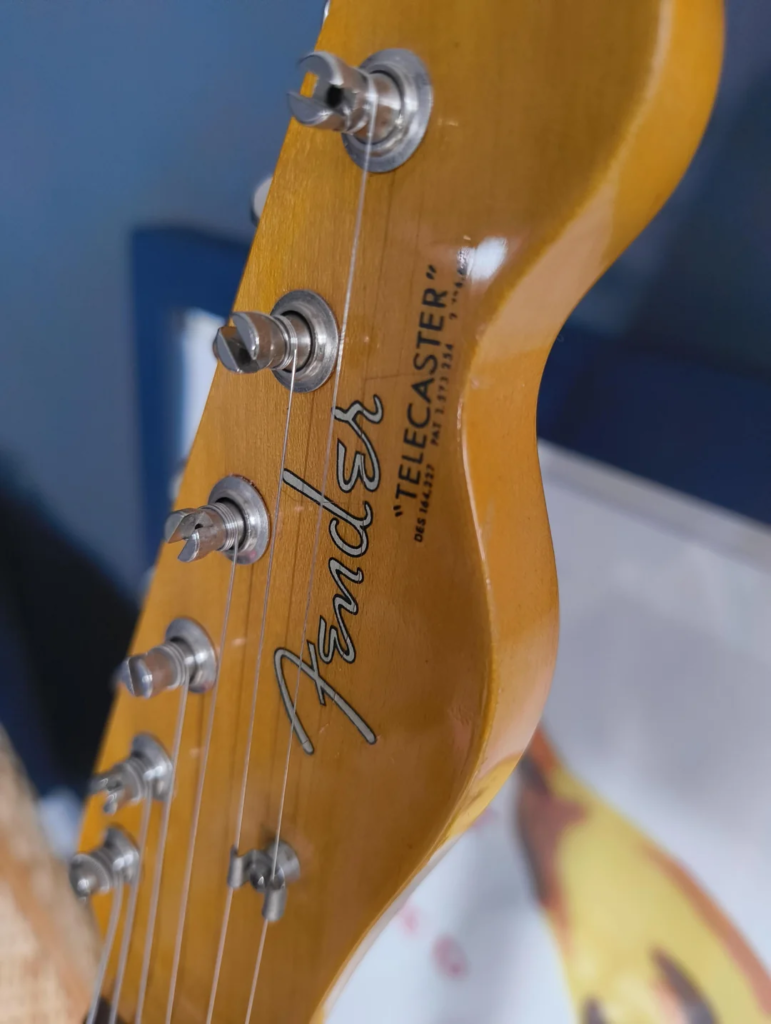
Method 3: Remove the Entire Face Finish
If the fake logo really bothers you, this is the cleanest long-term solution.
Steps:
- Remove tuners.
- Sand the front of the headstock.
- Strip the clear coat.
- Refinish with:
- Nitro lacquer
- Polyurethane
- Tru-Oil (if desired)
This gives the headstock a factory-clean appearance.
Can Heat Help?
Generally, no.
Polyurethane isn’t like vinyl.
Using:
- Heat guns
- Hair dryers
can soften or discolor the finish without releasing the decal.
Will Acetone Work?
Avoid it.
Acetone can quickly:
- Melt polyurethane
- Damage surrounding finish
- Leave cloudy patches
Likewise, avoid lacquer thinner or strong solvents.
If You Don’t Mind an Imperfect Result
Since you mentioned:
“I don’t mind if it looks a bit of a mess.”
You have more flexibility.
You could:
- Carefully scrape away the raised film.
- Lightly wet sand.
- Buff the area.
Even if a faint outline remains, it’ll usually be less distracting than a fake Fender logo.
Is It Worth Removing?
Considering the neck is an Allparts vintage-spec neck, many players actually prefer showing that it’s an aftermarket build rather than pretending it’s a Fender.
Removing the decal can:
- Make the guitar look more honest.
- Avoid confusion if you ever sell it.
- Give the headstock a cleaner appearance.
Common Mistakes to Avoid
- ❌ Pulling the decal aggressively.
- ❌ Using acetone.
- ❌ Heating the finish.
- ❌ Digging into the wood with a knife.
- ❌ Sanding through the clear coat too quickly.
- ❌ Using coarse sandpaper.
Frequently Asked Questions
Can I remove a waterslide decal without removing the tuners?
Yes. If you’re only trying to scrape or lightly wet sand the decal, you can mask around the tuners. However, removing them makes the job easier and reduces the risk of accidental scratches.
Will the decal peel off cleanly?
Only if it sits on top of the finish. If it’s under polyurethane, it usually won’t peel without lifting some clear coat.
Is wet sanding safer than using a scalpel?
In most cases, yes. Wet sanding removes the decal gradually and is less likely to chip the surrounding finish.
Can I refinish only the front of the headstock?
Yes. Many luthiers strip and refinish just the headstock face while leaving the rest of the neck untouched.
Final Recommendation
Based on your description, don’t try to peel it off outright with a scalpel. The raised edge suggests the decal wasn’t leveled well, but it’s still likely trapped under a thin layer of poly. The safest approach is to gently test the edge. If it doesn’t lift cleanly, switch to careful wet sanding with 1000 to 2000 grit, followed by polishing. This minimizes the risk of chipping the finish while giving you the best chance of removing the distracting fake Fender logo.
- Best Guitar Strings for Beginners in 2026
- Essential Beginner Guitar Chords Chart: Start Playing Today
- Your First Beginner Guitar Lessons: A Simple Guide
- How Often Should You Change Your Guitar Strings: A Guide
- Guitar Amp Settings Explained for New Players
