

DIY Les Paul Build: Turning a Guitar Kit into a Custom Shop Dream
Building your own DIY Les Paul is one of the most rewarding experiences for any guitarist or hobbyist. Instead of spending thousands on a Custom Shop instrument, many builders choose to invest their time, patience, and craftsmanship into creating a guitar that is completely unique.
This project showcases a stunning homemade Les Paul with a hand-carved maple top, flamed mahogany back, premium Faber hardware, custom pickups, brass shaft tuners, ABR-1 studs installed directly into the wood, tortoise side dots, and a beautifully executed spray can burst finish. The result is a guitar that rivals many factory-built instruments while carrying a personal story that no production model can match.
Why Build a DIY Les Paul?
Many players dream of owning a Gibson Custom Shop Les Paul, but the price can easily exceed several thousand dollars.
A DIY project allows you to:
- Build your dream guitar
- Choose premium hardware
- Customize every specification
- Learn valuable luthiery skills
- Save money
- Create a one-of-a-kind instrument
Perhaps the biggest reward is knowing every detail of your guitar was crafted by your own hands.
Starting with the Right DIY Kit
The foundation of every successful DIY Les Paul begins with a quality body and neck.
Important considerations include:
- Straight neck
- Good fretwork
- Solid body construction
- Accurate neck angle
- Tight neck joint
- Quality wood grain
A good kit makes customization significantly easier later in the build.
Hand Carving the Les Paul Top
One of the standout features of this project is the beautifully carved top.
Unlike flat-body kits, carving creates:
- Better light reflection
- Authentic Les Paul appearance
- Improved comfort
- Premium visual appeal
Hand carving requires:
- Patience
- Sharp carving tools
- Sanding blocks
- Constant measuring
Small adjustments make a dramatic difference in how the burst finish later highlights the guitar’s curves.
Beautiful Flamed Mahogany Back
Most builders focus entirely on the maple top.
This project pays equal attention to the back by showcasing spectacular flamed mahogany grain.
The natural figuring creates luxury-level aesthetics usually reserved for expensive custom instruments.
Benefits include:
- Rich appearance
- Enhanced wood character
- Premium visual depth
- Better finish presentation

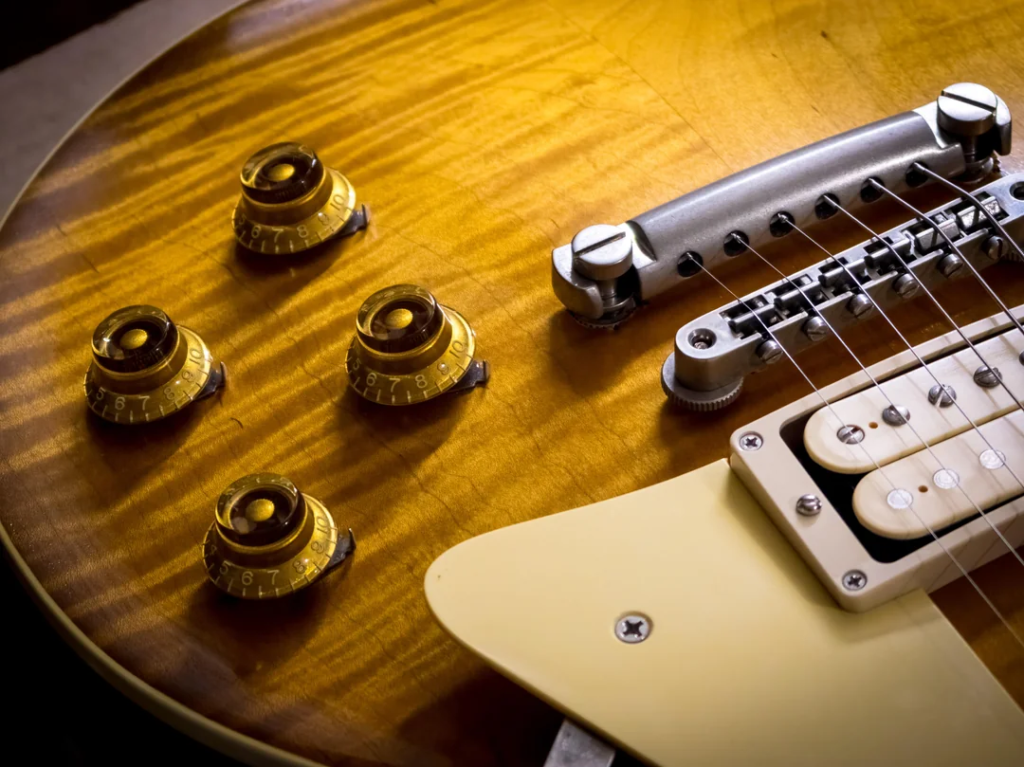
Creating a Stunning Burst with Spray Cans
Perhaps the most intimidating stage was applying the burst finish.
Professional builders often use spray guns, but this build proves excellent results are still possible using aerosol cans.
Tips for Spray Can Bursts
- Practice on scrap wood first
- Build color slowly
- Keep consistent spray distance
- Rotate the guitar frequently
- Blend edges gradually
- Apply multiple light coats
Although approximately six cans of finish were used, the final coating remained surprisingly thin.
A thin finish often allows the wood to resonate more naturally while giving the instrument an authentic vintage appearance.
Premium Hardware Selection
Rather than settling for standard kit components, nearly every hardware component received an upgrade.
Faber Hardware
Faber hardware is highly respected for its:
- Precision machining
- Vintage accuracy
- Excellent sustain
- Reliable tuning stability
These upgrades significantly improve both feel and tone.
ABR-1 Studs Installed into the Wood
Instead of using threaded inserts, the ABR-1 bridge studs are mounted directly into the body.
Advantages include:
- Vintage construction
- Better resonance
- Improved sustain
- Traditional Les Paul feel
Many vintage enthusiasts consider this an essential feature.
Crazy Brass Shaft Tuners
The brass shaft tuners provide:
- Excellent tuning stability
- Unique appearance
- Vintage-inspired aesthetics
- Smooth operation
The additional mass may also contribute to improved sustain.
Custom Pickups for a Personal Sound
Factory pickups work well, but custom pickups truly personalize the instrument.
Benefits include:
- Tailored output
- Preferred EQ response
- Vintage or modern voicing
- Better dynamics
Choosing pickups based on your playing style makes the guitar uniquely yours.
Neck Profile: Comfortable 60 Slim Shape
The neck features a 60 Slim profile, making it ideal for players who enjoy:
- Fast lead playing
- Comfortable rhythm work
- Smaller hand sizes
- Modern playability
Compared to thicker 50s necks, the slim profile feels noticeably faster.


Thin Finish for Better Resonance
Heavy finishes can slightly reduce natural resonance.
This project intentionally kept the finish relatively thin.
Advantages include:
- Better vibration transfer
- Vintage appearance
- Improved resonance
- Natural aging over time
Despite using several cans of lacquer, careful application kept the finish lightweight.
Build Challenges
Every DIY guitar project comes with obstacles.
Some of the biggest challenges include:
Carving
Removing too much wood cannot be reversed.
Burst Application
Uneven spray patterns can quickly ruin an otherwise beautiful top.
Sanding
Proper surface preparation determines final finish quality.
Hardware Installation
Bridge alignment and tuner placement require precision.
Estimated Cost Breakdown
| Component | Estimated Cost |
|---|---|
| DIY Kit | $250-$500 |
| Faber Hardware | $250-$400 |
| Custom Pickups | $150-$400 |
| Brass Tuners | $80-$200 |
| Spray Finish Supplies | $100-$200 |
| Sandpaper & Consumables | $50-$100 |
| Total | $900-$1800 |
Even with premium upgrades, many DIY builders spend significantly less than purchasing a comparable Custom Shop guitar.
Lessons Learned
This build demonstrates several important lessons:
- Patience always pays off.
- Quality hardware is worth the investment.
- Proper sanding determines finish quality.
- Thin finishes often look and sound better.
- Practice finishing techniques before spraying the guitar.
- Every small detail contributes to the final result.
Is Building a DIY Les Paul Worth It?
For guitar enthusiasts who enjoy woodworking, customization, and learning new skills, building a DIY Les Paul is absolutely worthwhile.
While it requires time and dedication, the finished instrument becomes more than just a guitar. It becomes a reflection of your craftsmanship and creativity.
Instead of owning a factory-made instrument identical to thousands of others, you end up with a guitar that carries your personal touch in every curve, every finish layer, and every hardware choice.
If you’ve ever dreamed of owning a Custom Shop-style Les Paul but couldn’t justify the price, building your own may be the most satisfying path to achieving that dream.
- Best Guitar Strings for Beginners in 2026
- Essential Beginner Guitar Chords Chart: Start Playing Today
- Your First Beginner Guitar Lessons: A Simple Guide
- How Often Should You Change Your Guitar Strings: A Guide
- Guitar Amp Settings Explained for New Players
