

Is This Acceptable Luthier Work? Here’s How to Judge Professional Guitar Repair Quality
Leaving a brand-new guitar with a professional luthier should give you confidence, not anxiety. Whether you own a D’Angelico acoustic, Martin, Taylor, Gibson, Fender, Yamaha, or Jackson, a professional setup should improve playability without leaving cosmetic damage.
If you picked up your guitar after a setup and fret polish only to discover scratches, tool marks, damaged finish, or other visible defects that weren’t there before, it’s reasonable to question the quality of the work.
The most important question is:
Are these marks a normal part of guitar maintenance, or did the luthier make avoidable mistakes?
Let’s examine what is acceptable, what isn’t, and what you should do next.
What Should a Professional Guitar Setup Include?
A standard guitar setup generally involves:
- Neck relief adjustment
- Truss rod adjustment
- Action adjustment
- Nut slot inspection
- Saddle adjustment
- Intonation (where applicable)
- Fret polishing
- Fingerboard cleaning
- Hardware inspection
- String replacement (optional)
A qualified luthier performs these tasks while protecting every finished surface of the instrument.
Is Cosmetic Damage Ever Acceptable?
In almost every case:
No.
A professional workshop should return your guitar in equal or better cosmetic condition than when it arrived.
Minor cleaning residue or fingerprints are normal.
The following are not considered acceptable:
- New scratches on the finish
- Sanding marks
- Tool slips
- Deep polishing marks
- Chips in the lacquer
- Gouges around frets
- Abrasive marks on the fingerboard
- Burn-through of satin or gloss finishes
A brand-new instrument deserves extra care.
Signs of Poor Luthier Work
1. Scratches Around the Frets
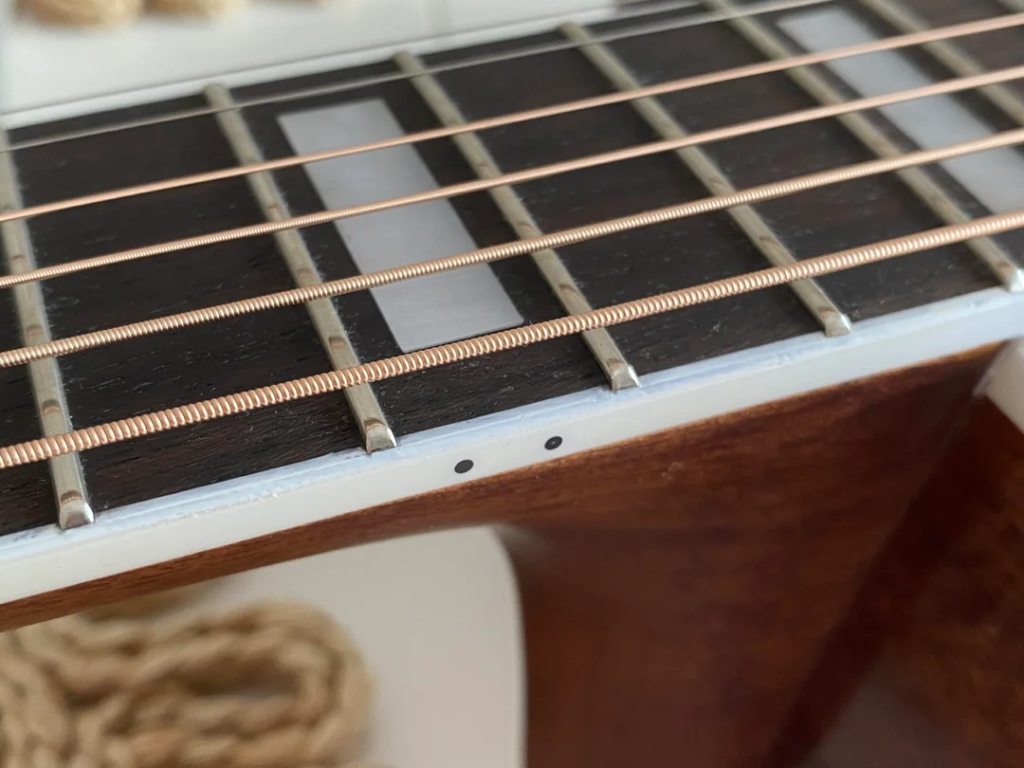
One common mistake is failing to mask the fingerboard before polishing frets.
This can leave:
- Circular polishing scratches
- Steel wool marks
- Abrasive haze
- Dull finish
Professional shops normally protect the surrounding wood using tape or specialized fret guards.
2. Tool Marks Near the Nut
Visible file marks around:
- the nut
- headstock
- first fret
usually indicate rushed work.
A careful technician keeps these areas clean.

3. Finish Damage
Gloss finishes should remain glossy.
If you notice:
- cloudy areas
- dull patches
- swirl marks
- sanding scratches
the finish may have been polished incorrectly.
4. Metal Polish Residue
Some compounds leave residue around:
- fret ends
- bridge
- binding
While easy to clean, excessive residue suggests poor attention to detail.
5. Uneven Fret Polish
Proper fret polishing leaves frets:
- mirror-like
- smooth
- consistent
If some frets remain dull while others are shiny, the work may have been rushed.
Could the Marks Be Normal?
Sometimes customers mistake harmless polishing haze or fingerprints for damage.
Examples include:
- temporary polishing compound
- microfiber streaks
- wax residue
These usually wipe away with a clean microfiber cloth.
However, scratches that catch a fingernail or remain after cleaning are not normal.
What If the Guitar Was Brand New?
This changes expectations.
A new guitar should come back looking new.
Most customers reasonably expect:
- zero finish damage
- zero scratches
- clean hardware
- polished frets
- proper setup
Any new cosmetic damage should be explained before pickup.

What You Should Do Before Complaining
Before contacting the shop:
Clean the Guitar
Use a clean microfiber cloth.
Sometimes residue looks worse than it is.
Compare Before-and-After Photos
If you photographed the guitar before dropping it off, compare:
- headstock
- neck
- fretboard
- body
- bridge
Photos make discussions objective.
Examine Under Good Lighting
Bright LED lighting can reveal marks invisible indoors.
Determine whether the marks are:
- superficial
- finish scratches
- wood damage
How to Talk to the Luthier
Stay calm and factual.
A professional shop usually wants satisfied customers.
You might say:
“I noticed several marks that weren’t present before the setup. Could you explain what caused them and whether they can be corrected?”
Most reputable luthiers will:
- inspect the guitar
- explain the issue
- polish out minor marks
- repair mistakes if necessary
When Should You Ask for Compensation?
Consider requesting corrective work if:
- finish damage occurred
- scratches are permanent
- the guitar lost cosmetic value
- repairs were performed carelessly
Many respected shops will correct honest mistakes without argument.
How to Choose a Good Luthier
Before leaving an expensive guitar:
Look for:
- Strong customer reviews
- Clear communication
- Photos of previous work
- Experience with your guitar type
- Professional workshop environment
- Transparent pricing
- Warranty on repair work
A skilled luthier treats every instrument as if it were their own.

Can Minor Scratches Affect the Sound?
Usually not.
Cosmetic damage rarely affects:
- tone
- sustain
- resonance
However, poor fret work can affect:
- buzzing
- intonation
- tuning stability
- playability
The appearance may be cosmetic, but workmanship quality matters.
Is It Worth Going Back?
Yes.
If you’re genuinely convinced the marks were introduced during the setup, give the shop the opportunity to inspect and address them.
Most reputable professionals value their reputation and will often resolve issues without conflict.
Frequently Asked Questions
Is it normal for a guitar setup to leave scratches?
No. A professional setup should not leave new scratches or finish damage.
Can fret polishing damage the fingerboard?
Only if performed carelessly. Proper masking and polishing techniques protect the wood and finish.
Should I accept swirl marks after a setup?
Very light polishing haze that wipes away may be normal. Permanent swirl marks or scratches are not.
Can finish scratches be repaired?
Many light scratches can be buffed or polished out. Deep scratches may require professional finish repair.
Should I trust the same luthier again?
If the shop acknowledges the issue and fixes it professionally, you may choose to continue working with them. If they deny obvious damage or repeatedly produce poor results, consider finding a more experienced technician.
Final Verdict
A professional guitar setup should leave your instrument playing better while preserving its original appearance. Minor residue or fingerprints are easily corrected, but new scratches, sanding marks, finish damage, or careless tool marks are not considered acceptable workmanship, especially on a brand-new guitar.
If the marks truly appeared after the service, document them with clear photos, discuss the issue politely with the luthier, and give the shop a chance to make things right. Skilled repair professionals take pride in clean, precise work, and a quality setup should inspire confidence every time you open the case.
- Best Guitar Strings for Beginners in 2026
- Essential Beginner Guitar Chords Chart: Start Playing Today
- Your First Beginner Guitar Lessons: A Simple Guide
- How Often Should You Change Your Guitar Strings: A Guide
- Guitar Amp Settings Explained for New Players
