

I Dropped My Guitar and Have No Idea How to Fix It
Dropping a guitar is every guitarist’s nightmare.
Whether it’s your first guitar, a treasured gift from your parents, or an expensive custom instrument, watching it hit the floor can instantly make your heart sink.
One Reddit user shared this situation after accidentally dropping a Jackson electric guitar during a routine string change.
The impact caused:
- A chunk of the finish to break away.
- Cracks spreading through the clear coat.
- Cosmetic damage around the body edge.
Fortunately, damage like this usually looks worse than it actually is.
Let’s analyze the situation carefully and determine the best solution.
What Happened?
From the description and photo, the guitar experienced an impact on one corner of the body.
Typical impact damage includes:
- Missing paint
- Broken polyurethane finish
- Wood exposure
- Hairline finish cracks
- Minor dents
The important question is:
Did the impact only damage the finish, or did it damage the wood itself?
This determines whether the repair is cosmetic or structural.
Step 1: Inspect the Guitar Carefully
Before attempting any repair, inspect these areas.
Body
Check if:
- Only paint is missing
- Wood fibers are crushed
- The body has split
- Cracks continue around the body
If the crack is only in the finish, that’s excellent news.
Neck
Look closely around:
- Neck pocket
- Heel
- Headstock
Any structural crack here requires professional attention.
Electronics
Plug the guitar into an amplifier.
Test:
- Pickup selector
- Volume knob
- Tone controls
- Output jack
If everything works normally, electronics likely survived the fall.
Bridge
Inspect:
- Saddles
- Tremolo posts
- Bridge alignment
Impact can occasionally knock hardware slightly out of alignment.
Is It Only Cosmetic?
Most Jackson guitars have a thick polyurethane finish.
Poly is extremely durable.
However…
When struck hard, it doesn’t dent easily.
Instead, it chips.
That’s why you’ll often see:
- Large missing paint chips
- Spider-web finish cracks
- Sharp edges around the damaged area
If the wood underneath feels solid, then the damage is cosmetic.
Should You Repair It Yourself?
That depends on your experience.
Beginner
If you’ve never repaired guitar finishes before:
Don’t attempt a full repaint.
Modern polyurethane finishes are surprisingly difficult to blend invisibly.
Poor repairs usually become much more noticeable than the original chip.
Experienced DIY
If you’re comfortable with woodworking:
You can repair the chip using:
- Super glue (CA glue)
- Color matching paint
- Drop-fill techniques
- Wet sanding
- Polishing compounds
This method can significantly improve appearance.
Temporary Protection
Even if you don’t repair the chip immediately, protect the exposed wood.
You can use:
- Clear nail polish
- Thin CA glue
- Clear lacquer
This seals moisture out until you decide on a permanent repair.
Step-by-Step Cosmetic Repair
Step 1
Clean the damaged area.
Remove:
- Dirt
- Dust
- Loose finish
Use isopropyl alcohol carefully.
Step 2
If wood is exposed:
Seal it using:
- Thin CA glue
- Clear lacquer
Allow it to cure fully.
Step 3
Fill missing finish.
Options include:
- Drop-fill CA glue
- Polyurethane finish
- Epoxy (less common)
Build the repair slowly.
Never overfill dramatically.
Step 4
Allow proper curing.
This may take:
- 24 hours
- Several days
depending on the product.
Step 5
Level the repair.
Use:
- 800 grit
- 1000 grit
- 1500 grit
- 2000 grit
Wet sanding gives the smoothest result.
Step 6
Buff the surface.
Use:
- Fine polishing compound
- Microfiber cloth
- Foam polishing pad
This restores gloss.

What If the Wood Is Cracked?
If you notice:
- Body separating
- Large splits
- Neck cracks
- Loose neck pocket
Stop immediately.
Structural repairs require:
- Wood glue
- Proper clamping
- Alignment
- Refinishing
A qualified luthier is the safest choice.
Should You Just Leave It Alone?
Many players do.
Battle scars become part of a guitar’s story.
Some famous guitars have decades of dents, chips, scratches, and worn finishes.
If the guitar:
- Plays well
- Stays in tune
- Has no structural issues
Then the chip is mostly cosmetic.
Common Mistakes to Avoid
Never:
- Sand aggressively
- Use household wood filler
- Spray random automotive paint
- Apply thick glue all at once
- Ignore neck cracks
- Rush polishing
Most poor repairs happen because people rush the process.
Estimated Repair Cost
| Repair | Estimated Cost |
|---|---|
| Small chip touch-up | $40 to $100 |
| Drop-fill finish repair | $80 to $200 |
| Spot refinishing | $150 to $350 |
| Full body refinish | $300 to $700+ |
Prices vary depending on finish type and local labor rates.
Can This Damage Affect Tone?
Generally, no.
A chipped finish on the body edge has virtually no effect on:
- Sustain
- Resonance
- Pickup output
- Playability
Only structural damage to the neck, bridge, or body joint is likely to affect performance.
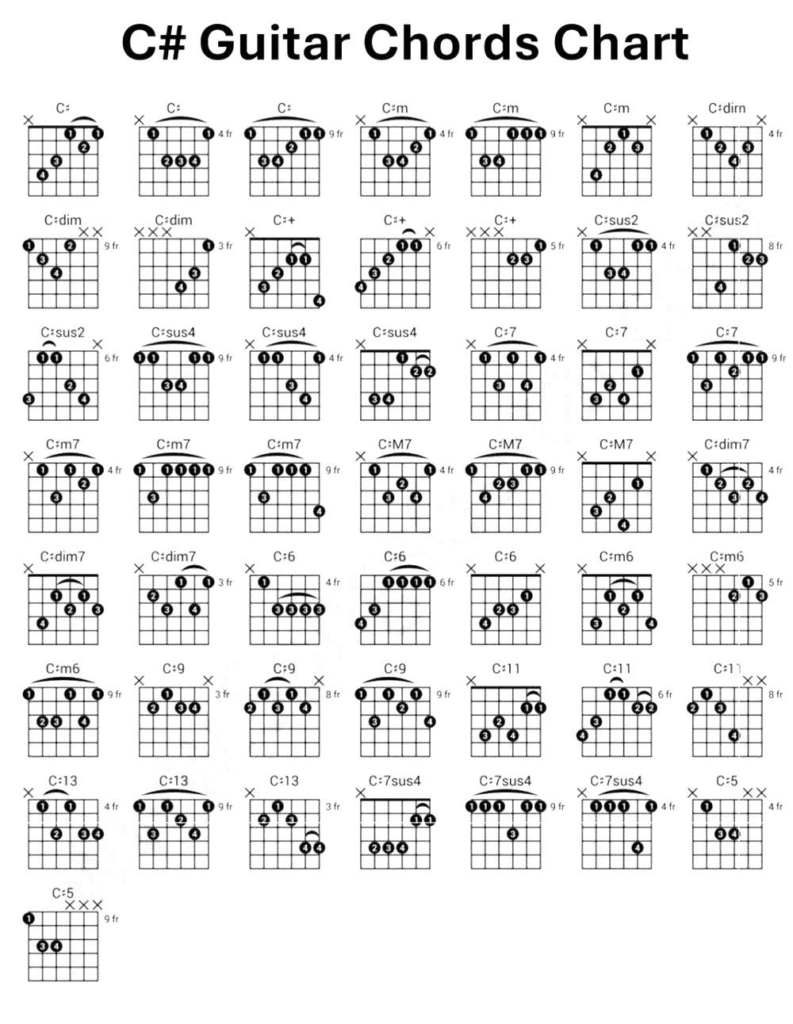
Guitar Chord Lesson: C# Guitar Chords
The uploaded chord chart showcases several C# chord variations, including:
- C# Major
- C# Minor (C#m)
- C#7
- C#maj7
- C#m7
- C#6
- C#m6
- C#9
- C#11
- C#13
- C#sus2
- C#sus4
- C#dim
- C#dim7
- C#aug (C#+)
- C#5 Power Chord
Learning multiple voicings helps you:
- Play smoothly across the fretboard.
- Understand the CAGED system.
- Improve rhythm and lead accompaniment.
- Add variety to chord progressions.
Frequently Asked Questions
Can I fix a chipped guitar finish myself?
Yes, if the damage is only cosmetic and you have patience. Simple chips can often be sealed and improved with careful drop-fill techniques.
Will a chipped finish spread?
The finish crack itself may expand slightly if the guitar receives additional impacts, but it usually remains stable if protected.
Does a finish chip reduce guitar value?
Minor cosmetic chips may lower resale value, but they rarely affect playability or tone.
Should I use wood filler?
No. Wood filler is not designed for guitar finish repairs and often leads to poor cosmetic results.
When should I visit a luthier?
Seek professional help if you notice:
- Neck cracks
- Body separation
- Loose hardware caused by impact
- Electronic issues after the fall
Final Thoughts
Accidentally dropping a guitar is frustrating, especially when it carries sentimental value like a gift from family. The good news is that most finish chips and clear coat cracks are cosmetic rather than structural. Take time to inspect the instrument, protect any exposed wood, and avoid rushing into an aggressive repair. If the guitar still plays well and stays in tune, you can either live with the mark as part of its history or restore its appearance with a careful finish repair. Patience and proper technique will always produce better results than a quick fix.
- Best Guitar Strings for Beginners in 2026
- Essential Beginner Guitar Chords Chart: Start Playing Today
- Your First Beginner Guitar Lessons: A Simple Guide
- How Often Should You Change Your Guitar Strings: A Guide
- Guitar Amp Settings Explained for New Players
