

How to Tune a Ukulele for Absolute Beginners
Picking up a ukulele for the first time is exciting — but before you strum a single chord, you need to get it in tune. A ukulele that’s out of tune will sound off no matter how well you play, and it can make learning chords far more confusing than it needs to be. The good news? Tuning a ukulele is simple once you understand the four strings and how the tuning pegs work.
This guide walks you through everything a complete beginner needs: the string names, how to tune step by step, how to read the fretboard, and how to hold and strum the ukulele correctly.
Getting to Know Your Ukulele
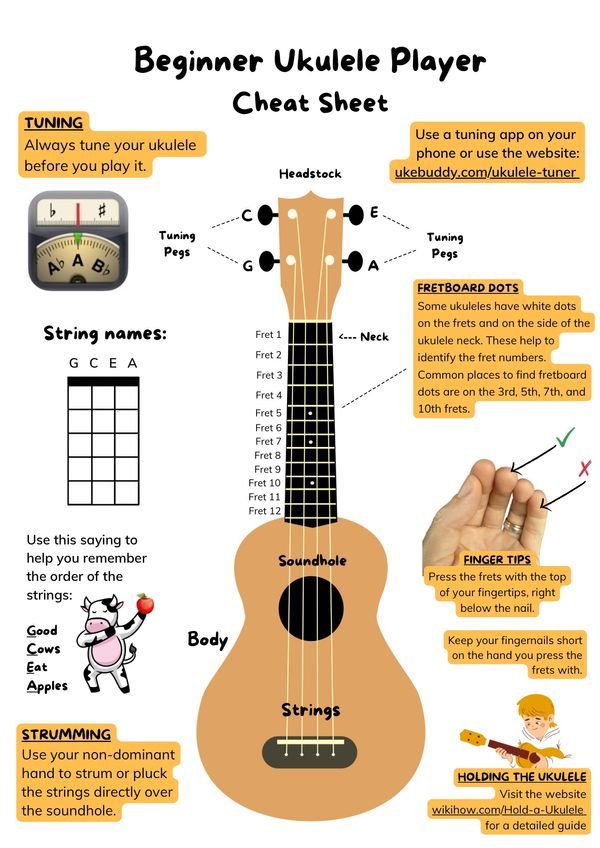
Before tuning, it helps to know the basic parts of the instrument:
- Headstock — the top part of the ukulele where the tuning pegs are located
- Tuning pegs — the knobs you turn to tighten or loosen each string
- Neck — the long part you press the strings against
- Frets — the numbered sections along the neck
- Body — the hollow part that produces sound
- Soundhole — the round opening where sound resonates
- Strings — the four strings you pluck or strum
The Four Ukulele Strings: G, C, E, A
A standard ukulele has four strings, tuned to G, C, E, and A — read from the top string (closest to your face when playing) down to the bottom string (closest to the floor).
A simple way beginners remember this order is with the phrase:
Good Cows Eat Apples
Each string connects to a specific tuning peg on the headstock, so knowing which peg controls which string is the first step to tuning correctly.

How to Tune a Ukulele Step by Step
- Use a tuner. As a beginner, don’t rely on your ear yet. Use a clip-on tuner or a free tuning app on your phone (or a website like ukebuddy.com/ukulele-tuner) to check each string accurately.
- Pluck one string at a time, starting with the G string.
- Watch the tuner display. If the note reads flat (too low), turn the tuning peg to tighten the string. If it reads sharp (too high), loosen it slightly.
- Turn slowly. Ukulele strings are more sensitive than guitar strings — small peg movements make a noticeable pitch difference.
- Repeat for C, E, and A strings, tuning each one until the app or tuner confirms it’s accurate.
- Re-check all four strings once more, since tightening one string can slightly shift the tension on the others.
New ukuleles and fresh strings tend to fall out of tune quickly, so don’t worry if you need to repeat this process every time you practice for the first few weeks.
Understanding the Fretboard
Once your ukulele is in tune, take a moment to understand the fretboard — the numbered sections on the neck where you press down to change notes.
Many ukuleles have small white fretboard dots marking specific frets, usually the 3rd, 5th, 7th, and 10th frets. These dots make it much easier to find your place on the neck without counting frets every time, especially once you start learning chords further up the neck.
Proper Hand Position and Strumming
Good technique from the start will save you bad habits later:
- Use the tip of your fingers, just below the nail, to press down on the frets — not the flat pad of your finger.
- Keep the fingernails on your fretting hand trimmed short so you can press cleanly on the strings.
- Strum or pluck the strings with your non-dominant hand, directly over the soundhole for the fullest sound.
- Hold the ukulele snug against your body with your strumming arm, rather than gripping the neck too tightly with your fretting hand.
Your First Basic Ukulele Chords
Once tuning feels comfortable, the natural next step is learning your first chords. Beginners usually start with C, G, Am, and F, since these combine to form the basis of hundreds of popular songs.


Here’s a quick breakdown of common beginner chords:
- C — one finger, third fret, top string
- Am — one finger, second fret, top string
- F — two fingers, first and second fret
- G — three fingers across the top three strings
- D, E, Em, A — slightly more advanced but useful once C, G, Am, and F feel natural
Practice switching slowly between two chords at a time (for example, C to Am) before moving on to full songs.
Common Beginner Mistakes to Avoid
- Tuning by ear too early — use a tuner until your ear develops.
- Pressing too hard on the frets — this tires your fingers fast and doesn’t improve tone.
- Skipping fretboard familiarity — knowing where the dots are saves time later.
- Rushing chord changes — accuracy first, speed comes naturally with practice.
Frequently Asked Questions (FAQ)
Q1: What are the ukulele string names? A standard ukulele is tuned to G, C, E, and A, remembered with the phrase “Good Cows Eat Apples.”
Q2: Can I tune a ukulele without an app? Yes, but it’s much harder for beginners to tune accurately by ear. A tuning app or clip-on tuner is strongly recommended until your ear develops.
Q3: How often do I need to tune a ukulele? New ukuleles or fresh strings may need tuning every time you play for the first few weeks. Once strings settle, tuning becomes less frequent.
Q4: What are the fretboard dots for? They mark specific frets — commonly the 3rd, 5th, 7th, and 10th — to help you find your position on the neck quickly.
Q5: What chords should beginners learn first? Most beginners start with C, G, Am, and F, since these four chords appear in a huge number of songs.
New to string instruments? Check out our related guide: How to Tune a Guitar for Absolute Beginners. Once you’re comfortable with tuning, explore more beginner guitar and ukulele lessons on Achyutaya.
External Reference
- UkeBuddy Ukulele Tuner — free online tuner
- wikiHow: How to Hold a Ukulele — detailed holding guide
