

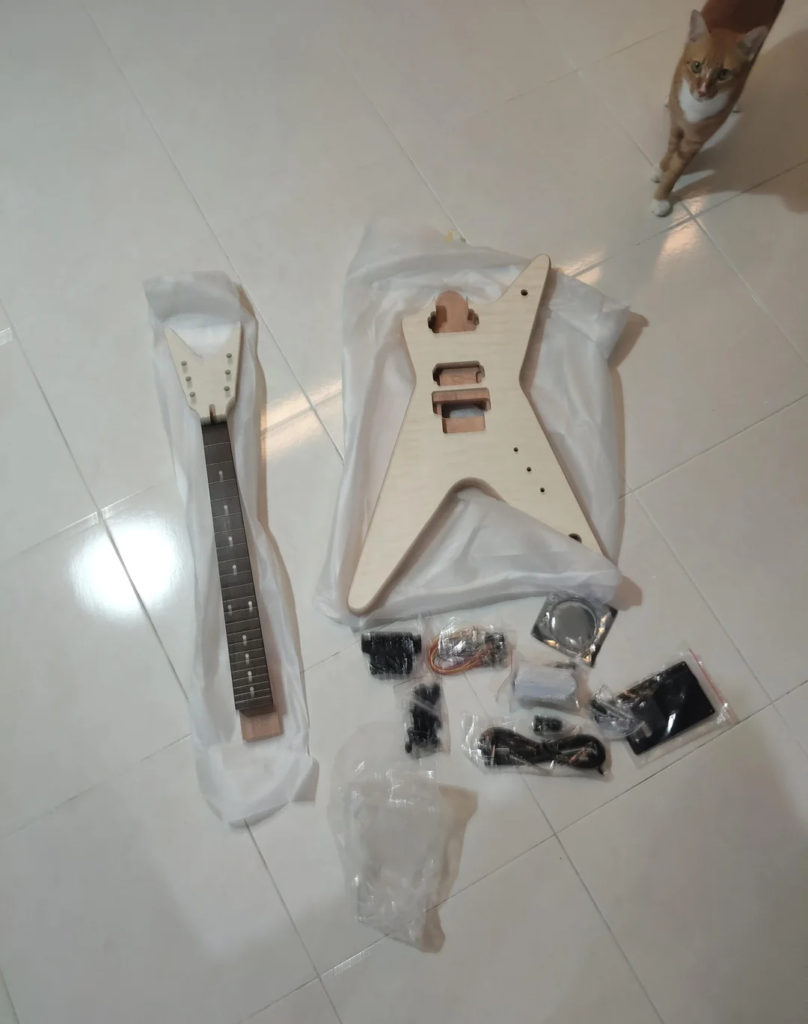
Looking at a plain DIY guitar body and wondering where to start? You’re definitely not alone. The beauty of a DIY guitar kit is that it becomes a blank canvas where your personality can be louder than the amplifier. Whether you love clean minimalism, vintage vibes, metal aesthetics, or colorful artwork, there are countless ways to create a guitar that’s uniquely yours.
Why Customize a DIY Guitar?
A DIY guitar is more than just an instrument. It’s a personal project that combines woodworking, painting, creativity, and music. Every scratch, color, and detail tells part of your story.
Benefits include:
- Completely unique appearance
- Learn finishing and painting skills
- Improve resale appeal with quality craftsmanship
- Personal connection with your instrument
- Great conversation starter at gigs and jam sessions
25 DIY Guitar Design Ideas
1. Natural Wood Finish


6
Instead of covering the wood, highlight its natural grain using:
- Clear polyurethane
- Tung oil
- Danish oil
- Satin finish
Perfect for maple, ash, mahogany, or walnut bodies.
Best for: Vintage and classy aesthetics.
2. Sunset Gradient


5
Blend colors like:
- Orange
- Red
- Purple
- Yellow
Finish with glossy clear coat.
3. Galaxy Theme


6
Use:
- Dark blue
- Black
- White stars
- Nebula effects
- Metallic sparkle
Looks incredible under stage lighting.
4. Japanese Cherry Blossom
Paint:
- Soft pink blossoms
- Black tree branches
- White background
Elegant and timeless.
5. Comic Book Style
Bold outlines with:
- Bright primary colors
- Halftone dots
- Cartoon shadows
Creates a 3D comic appearance.
6. Marble Effect
Popular colors:
- White
- Black
- Gold veins
- Blue marble
Easy using hydro dipping.

7. Resin Ocean Wave
Great for epoxy enthusiasts.
Include:
- Blue transparent resin
- White crashing waves
- Sand texture
Perfect beach aesthetic.
8. Steampunk Guitar
Combine:
- Bronze paint
- Fake gears
- Copper accents
- Rivets
Industrial yet artistic.
9. Minimal Matte Black
Sometimes less really is more.
Features:
- Matte black body
- Black hardware
- Black pickups
- Black knobs
Stealth appearance.
10. White with Gold Hardware
Luxury-inspired combination:
- Pearl white finish
- Gold bridge
- Gold tuners
- Gold knobs
Very premium looking.
11. Glow in the Dark Design
Paint:
- Stars
- Skeleton
- Lightning
- Tribal graphics
Great for concerts.
12. Transparent Dye Finish
Instead of paint:
Use wood dye to preserve grain.
Popular colors:
- Blue
- Emerald
- Crimson
- Purple
13. Flames
Classic hot rod style.
Red and orange flames over:
- Black
- White
- Metallic silver
14. Mountain Landscape
A scenic artwork featuring:
- Pine trees
- Mountains
- Lake
- Moonlight
Ideal for acoustic-inspired aesthetics.
15. Retro 80s Synthwave
Neon colors with:
- Purple sky
- Grid floor
- Pink sun
- Palm trees
Very eye-catching.
16. Graffiti Art
Perfect if you enjoy street art.
Include:
- Spray effects
- Bold lettering
- Bright colors
17. Watercolor Style
Blend soft colors naturally.
Popular palettes:
- Blue
- Purple
- Pink
Looks artistic without being overwhelming.
18. Vintage Relic Finish
Artificial aging using:
- Worn edges
- Small dents
- Light checking
- Satin clear coat
Gives decades-old character.
19. Mandala Pattern
Hand-paint intricate circular designs.
Great on:
- White body
- Black body
- Natural wood
20. Carbon Fiber Look
Use vinyl wrap or hydro dipping.
Modern and sporty appearance.
21. Skull Artwork
Perfect for rock and metal players.
Can include:
- Flames
- Roses
- Snakes
22. Anime Inspired
Create artwork based on your favorite series while respecting copyright if you plan to sell or publish the design.
23. Geometric Shapes
Use painter’s tape for:
- Triangles
- Hexagons
- Lines
Produces clean modern designs.
24. Music Sheet Theme
Paint:
- Staff lines
- Musical notes
- Clefs
- Lyrics (your own or public domain)
Perfect for musicians.
25. Your Personal Story Guitar
The most meaningful option.
Include elements that represent:
- Favorite places
- Family symbols
- Your band logo
- Important dates
- Original artwork
- Inspirational quotes
Years later, every mark can remind you of a chapter in your musical journey.
Which Paint Should You Use?
| Paint | Recommended |
|---|---|
| Acrylic | ⭐⭐⭐⭐⭐ |
| Automotive Paint | ⭐⭐⭐⭐⭐ |
| Nitrocellulose | ⭐⭐⭐⭐☆ |
| Polyurethane | ⭐⭐⭐⭐⭐ |
| Spray Paint | ⭐⭐⭐⭐☆ |
Always finish with multiple clear coats for durability.
Essential Tools
- Sandpaper (220 to 2000 grit)
- Primer
- Paint
- Clear coat
- Painter’s tape
- Masking paper
- Tack cloth
- Safety mask
- Polishing compound
- Buffing pad
Step-by-Step Painting Process
- Remove all hardware.
- Sand the body smooth.
- Fill imperfections if necessary.
- Apply primer.
- Sand lightly.
- Spray the base color.
- Add artwork or graphics.
- Apply several clear coats.
- Allow adequate curing time.
- Wet sand and polish.
- Reassemble the guitar.
- Set up the action and intonation.
Common Mistakes to Avoid
- Painting without sanding
- Skipping primer
- Applying thick paint coats
- Rushing the drying process
- Touching uncured paint
- Ignoring humidity and dust
- Using incompatible paint systems
- Reassembling too early
Frequently Asked Questions
What is the easiest DIY guitar design for beginners?
A natural wood finish, matte solid color, or simple geometric pattern are beginner-friendly because they require fewer materials and are more forgiving.
Can I use regular spray paint?
Yes, but choose a quality spray paint and protect it with several clear coats designed for durability.
Should I paint before assembling the guitar?
Yes. Finish all sanding, painting, and clear coating before installing electronics and hardware.
Is hydro dipping a good option?
Yes. Hydro dipping can create striking marble, camouflage, or abstract patterns, though it requires practice and a proper protective clear coat.
Will a custom paint job affect the guitar’s sound?
In most cases, a typical paint finish has little to no noticeable effect on the guitar’s tone. Proper setup, pickups, strings, and construction play a much larger role.
Final Thoughts
Designing a DIY guitar is an opportunity to build an instrument that reflects your style as much as your playing. Whether you choose a sleek matte black finish, a vivid galaxy scene, or a natural wood grain with subtle accents, careful preparation and patience will make the biggest difference. Take your time, use quality materials, and let each layer cure properly. The result will be a guitar that is both visually distinctive and uniquely yours.
- Best Guitar Strings for Beginners in 2026
- Essential Beginner Guitar Chords Chart: Start Playing Today
- Your First Beginner Guitar Lessons: A Simple Guide
- How Often Should You Change Your Guitar Strings: A Guide
- Guitar Amp Settings Explained for New Players
