

From Dumpster to Center Stage: A Guitar Restoration Story Worth Telling
Finding a guitar in the trash is something most musicians only joke about. Yet sometimes, hidden beneath cracked finishes, mismatched hardware, and decades of neglect lies an instrument with incredible potential.
This restoration story proves that a guitar doesn’t have to be expensive or factory-perfect to become someone’s favorite instrument. With patience, quality replacement parts, and the expertise of a skilled luthier, even a discarded guitar can become a lifelong companion.
Whether you’ve found an old guitar, inherited one, or accidentally damaged your favorite instrument, this guide explains what makes restoration worthwhile and when it’s the better choice over buying new.
A Guitar That Almost Ended Up in the Landfill
A few months ago, a heavily abused guitar was discovered sitting in a dumpster.
At first glance, it looked beyond saving:
- Cracks throughout the body
- Frankenstein combination of parts
- 1980s replacement body
- Low-quality imported pickups
- Stratocaster neck from another guitar
- Worn electronics
- Poor playability
- Years of neglect
Most people would have walked away.
Instead, it was taken to an experienced luthier.
That decision changed everything.
The Magic of Professional Guitar Restoration
Many guitar problems look catastrophic but are surprisingly repairable.
A professional luthier evaluates several important areas before deciding whether restoration is practical.
Structural Integrity
The first priority is ensuring:
- Neck pocket stability
- Body cracks
- Headstock condition
- Truss rod functionality
- Bridge mounting strength
Cosmetic damage often looks worse than structural damage.

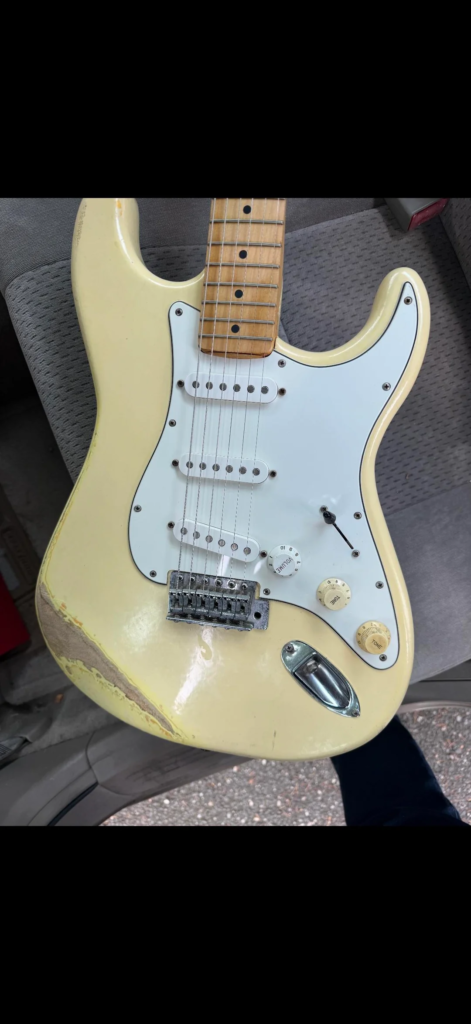
Replacing the Frankenstein Parts
One reason the guitar never played properly was the collection of mismatched components installed over several decades.
These included:
- Incorrect Stratocaster neck
- Cheap aftermarket pickups
- Low-end electronics
- Poor hardware compatibility
Replacing incompatible parts dramatically improved both performance and reliability.
Upgrading the Guitar Neck
The neck is arguably the most important part of any guitar.
A quality replacement neck improves:
- Playability
- Comfort
- Intonation
- Tuning stability
- Action adjustment
- Sustain
Many players discover that replacing a poor neck completely transforms how an instrument feels.
Installing Better Pickups
Cheap pickups often produce:
- Weak output
- Muddy tone
- Excessive noise
- Poor frequency balance
After upgrading to higher-quality pickups, the guitar gained:
- Better clarity
- Improved dynamics
- Stronger sustain
- Rich harmonic response
- Greater note definition
For many restorations, pickups provide the biggest tonal improvement.
Complete Professional Setup
Hardware upgrades alone aren’t enough.
The guitar received a complete professional setup including:
Fret Leveling
Uneven frets create:
- Buzzing
- Dead notes
- Poor action
Leveling restores smooth playability.
Neck Relief Adjustment
Correct truss rod adjustment ensures:
- Comfortable action
- Accurate intonation
- Better sustain
Nut Optimization
A properly cut nut improves:
- Tuning stability
- Open chord clarity
- Comfortable string height
Intonation
Precise bridge adjustments ensure notes stay in tune across the fretboard.

Before vs After: An Incredible Transformation
The difference was remarkable.
Before Restoration
- Dumpster condition
- Random replacement parts
- Cracked body
- Cheap pickups
- Poor neck
- Difficult to play
After Restoration
- Smooth fretwork
- Comfortable neck
- Premium electronics
- Reliable hardware
- Excellent tuning stability
- Professional playability
The owner now considers it their forever guitar.
That’s something money alone cannot buy.
Can a Damaged Guitar Always Be Saved?
Many players ask this after dropping a guitar or discovering damage.
For example, a player may accidentally drop a cherished Jackson guitar during a string change, leaving:
- A chipped finish
- Cracked clear coat
- Small wood damage
Fortunately, cosmetic damage rarely means the guitar is ruined.
Cosmetic Damage
Usually includes:
- Paint chips
- Finish cracks
- Surface scratches
- Clear coat damage
These generally don’t affect sound.
Structural Damage
More serious issues include:
- Neck cracks
- Headstock breaks
- Loose neck joints
- Body splits
These require professional evaluation but are often repairable.
What Should You Do Immediately After Dropping a Guitar?
Avoid making repairs without understanding the damage.
Instead:
- Inspect the neck carefully.
- Check tuning stability.
- Examine the bridge.
- Look for new cracks.
- Photograph the damage.
- Avoid using super glue on finished surfaces.
- Visit a trusted luthier for assessment.
Improper DIY repairs can reduce the guitar’s value and make future restoration harder.

When Is Restoration Worth the Cost?
Restoration makes sense when the guitar has:
- Sentimental value
- A comfortable body shape
- Good wood quality
- Vintage potential
- Unique character
- Strong structural foundation
Many musicians keep restored guitars for decades because they become deeply personal instruments.
Restoration vs Buying a New Guitar
| Restoration | Buying New |
|---|---|
| Preserves sentimental value | Factory fresh |
| Often unique | Standard specifications |
| Can outperform expectations | Predictable quality |
| Environmentally friendly | Higher manufacturing footprint |
| Personalized upgrades | Limited customization |
Restoring an existing guitar is also a sustainable choice, reducing waste while giving quality wood and hardware a second life.
Tips for Anyone Considering a Guitar Restoration
- Start with a structural inspection.
- Invest in a quality neck if needed.
- Upgrade pickups before replacing the entire guitar.
- Replace worn electronics.
- Install quality hardware.
- Get a professional setup after every major modification.
- Keep before-and-after photos to document the journey.
Frequently Asked Questions
Is it worth restoring an old guitar?
Yes. If the body and neck are structurally sound, restoration can deliver excellent playability while preserving sentimental or vintage value.
Can cracked guitar finishes be repaired?
Yes. Finish cracks and chips are often repairable by a professional, though invisible repairs may require refinishing.
Do pickups make a big difference?
Absolutely. High-quality pickups improve clarity, output, dynamics, and overall tone more than many other upgrades.
Should I repair a dropped guitar myself?
Minor cleaning and inspection are fine, but structural repairs and finish work are best handled by a qualified luthier.
Can a cheap guitar become a great guitar?
Yes. Many affordable guitars have excellent wood and construction. With upgraded hardware, electronics, fretwork, and setup, they can perform far beyond their original price.
Final Thoughts
Every scratch tells a story, but not every damaged guitar is destined for retirement. The journey from dumpster to center stage shows that skilled craftsmanship, thoughtful upgrades, and a willingness to see potential can transform an overlooked instrument into a treasured companion.
Whether you’ve rescued a neglected project guitar or accidentally chipped a beloved Jackson, remember that cosmetic damage is rarely the end of the road. With the right repairs and setup, today’s battered instrument could become tomorrow’s forever guitar.
- Best Guitar Strings for Beginners in 2026
- Essential Beginner Guitar Chords Chart: Start Playing Today
- Your First Beginner Guitar Lessons: A Simple Guide
- How Often Should You Change Your Guitar Strings: A Guide
- Guitar Amp Settings Explained for New Players
