

If you’ve added rhinestones to your guitar using hot glue and now want to remove them safely, the good news is that hot glue is usually one of the easiest adhesives to remove. However, the finish on your guitar determines how careful you need to be. If your guitar has a polyurethane or polyester finish, you’re generally in a safer position than with a delicate nitrocellulose lacquer finish.
In this guide, we’ll cover the safest methods to remove hot glue, what to avoid, and how to deal with finish damage if something unexpected happens.
Can You Remove Hot Glue Without Damaging the Guitar?
Yes, in most cases.
Hot glue doesn’t chemically bond with the finish like super glue or epoxy. Instead, it sits on top of the clear coat and grips mechanically.
If removed carefully, the finish should remain intact.
The biggest risk isn’t the glue itself.
It’s using excessive force or the wrong chemicals.
Know Your Guitar Finish First
Different finishes react differently.
| Finish Type | Risk Level |
|---|---|
| Polyurethane | Low |
| Polyester | Low |
| Nitrocellulose Lacquer | Medium to High |
| Satin Finish | Medium |
If you’re unsure which finish your guitar has, check the manufacturer’s specifications before using any solvents.
Tools You’ll Need
- Hair dryer (not a heat gun)
- Plastic guitar pick
- Plastic scraper or old credit card
- Microfiber cloth
- Naphtha (lighter fluid)
- Cotton swabs
- Guitar polish
- Patience
Step 1: Soften the Hot Glue
Use a hair dryer on the lowest heat setting.
Hold it about 8 to 10 inches away.
Warm one rhinestone for around 20 to 30 seconds.
The goal is to soften the glue.
Do not make it hot enough to soften the finish.
Step 2: Gently Twist the Rhinestone
Avoid pulling straight upward.
Instead:
- Twist gently
- Wiggle slightly
- Lift slowly
Most hot glue releases surprisingly easily once warmed.
Step 3: Peel Away Remaining Glue
Often the glue peels away with your fingers.
If not:
Use:
- Plastic guitar pick
- Plastic scraper
- Credit card edge
Never use:
- Razor blades
- Metal scrapers
- Screwdrivers
- Knives
Metal tools can scratch the clear coat instantly.
Step 4: Remove Glue Residue
A tiny amount of residue may remain.
Naphtha (lighter fluid) is commonly used by guitar technicians because it evaporates quickly and is generally safe for cured polyurethane and polyester finishes.
Apply a small amount to a microfiber cloth.
Rub gently.
Always test on a hidden area first.
What Chemicals Should You Avoid?
Never use:
- Acetone
- Nail polish remover
- Paint thinner
- Lacquer thinner
- Goo Gone (especially on nitro finishes)
- Alcohol in large amounts
These products can soften or permanently damage many guitar finishes.
What If the Finish Comes Off Too?
If the rhinestones have been attached for years, there’s a small chance:
- The clear coat lifts
- Color coat chips
- Existing finish damage becomes visible
If this happens:
Stop immediately.
Don’t continue removing additional rhinestones until you know what’s happening.

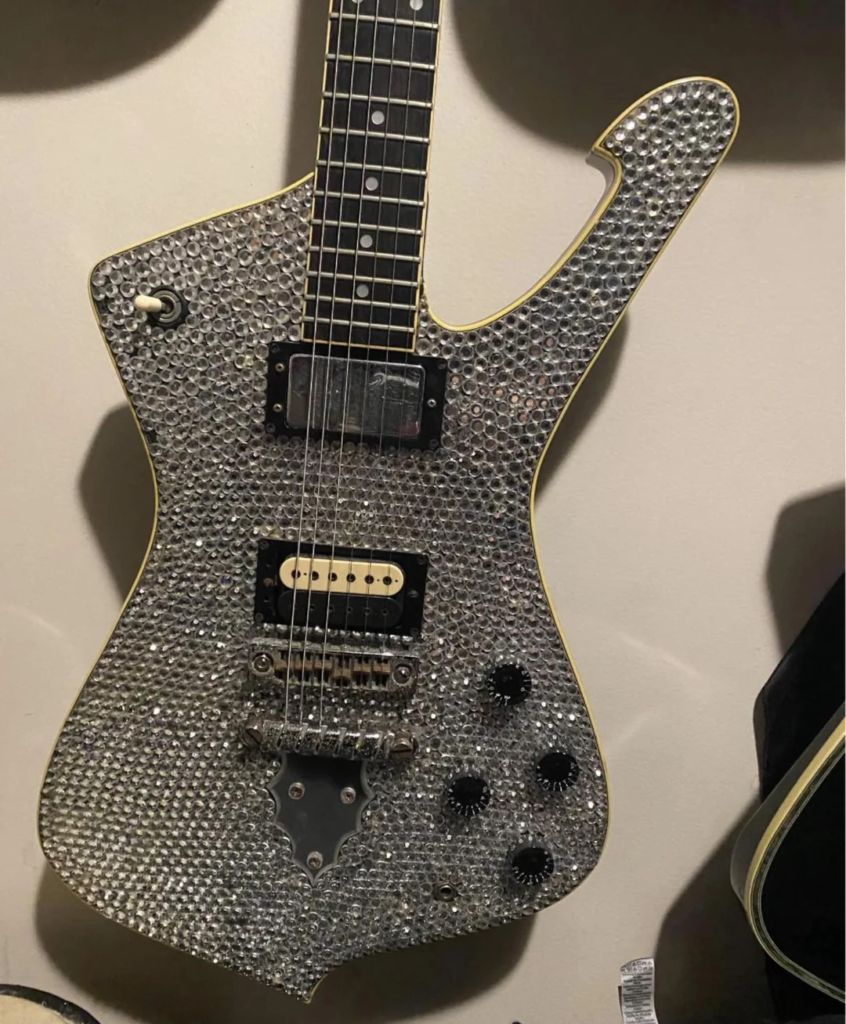
Can Dental Floss Help?
Yes.
Slide unwaxed dental floss behind the rhinestone.
Work it back and forth slowly.
This cuts through softened hot glue without scratching the finish.
Many guitar repair shops use this technique for removing decals and accessories.
Cleaning After Removal
After all glue is gone:
- Wipe with a clean microfiber cloth.
- Apply a quality guitar polish suitable for your finish.
- Buff lightly.
Your guitar should regain its original shine.
Common Mistakes to Avoid
- Using a heat gun instead of a hair dryer
- Pulling rhinestones straight off
- Using metal tools
- Applying acetone
- Rushing the process
- Heating one area for too long
What If Your Guitar Already Has Finish Damage?
If your guitar also suffered an impact that chipped the finish, removing hot glue won’t repair that damage.
A small chip usually has three repair options:
1. Leave It Alone
Many players keep battle scars as part of the instrument’s history.
Pros:
- No risk
- Original finish remains
Cons:
- Cosmetic damage
2. Drop Fill Repair
Small chips can be repaired using clear finish or superglue drop-fill techniques.
After curing:
- Level sand
- Polish
This produces nearly invisible repairs when done correctly.
3. Professional Refinishing
For large chips, cracks, or exposed wood, a professional luthier can refinish the damaged section.
This offers the best cosmetic result but is the most expensive option.
Frequently Asked Questions
Will hot glue permanently damage my guitar?
Usually not. Hot glue generally sits on top of the finish and can often be removed cleanly with gentle heat and patience.
Can I use Goo Gone?
It’s not recommended, especially on nitrocellulose finishes. Naphtha is generally considered a safer choice for cured guitar finishes.
Is a heat gun safe?
No. Heat guns become much hotter than necessary and can soften or blister the finish.
Should I use fishing line or dental floss?
Yes. Unwaxed dental floss or thin fishing line is an excellent way to separate softened hot glue from the finish.
Can finish chips be repaired at home?
Minor chips can sometimes be improved with drop-fill repairs, but matching color and gloss requires experience. Valuable guitars are usually best handled by a professional.
Final Thoughts
Removing hot-glued rhinestones is usually much less intimidating than it sounds. The key is gentle heat, plastic tools, and patience. Most hot glue releases without harming a modern polyurethane or polyester finish, while older nitrocellulose finishes deserve extra caution. If your guitar already has chips or cracks from an accidental drop, treat those as a separate repair rather than trying to fix everything at once. With a careful approach, you can remove the decorations, preserve the original finish, and keep your instrument looking its best.
- Best Guitar Strings for Beginners in 2026
- Essential Beginner Guitar Chords Chart: Start Playing Today
- Your First Beginner Guitar Lessons: A Simple Guide
- How Often Should You Change Your Guitar Strings: A Guide
- Guitar Amp Settings Explained for New Players
